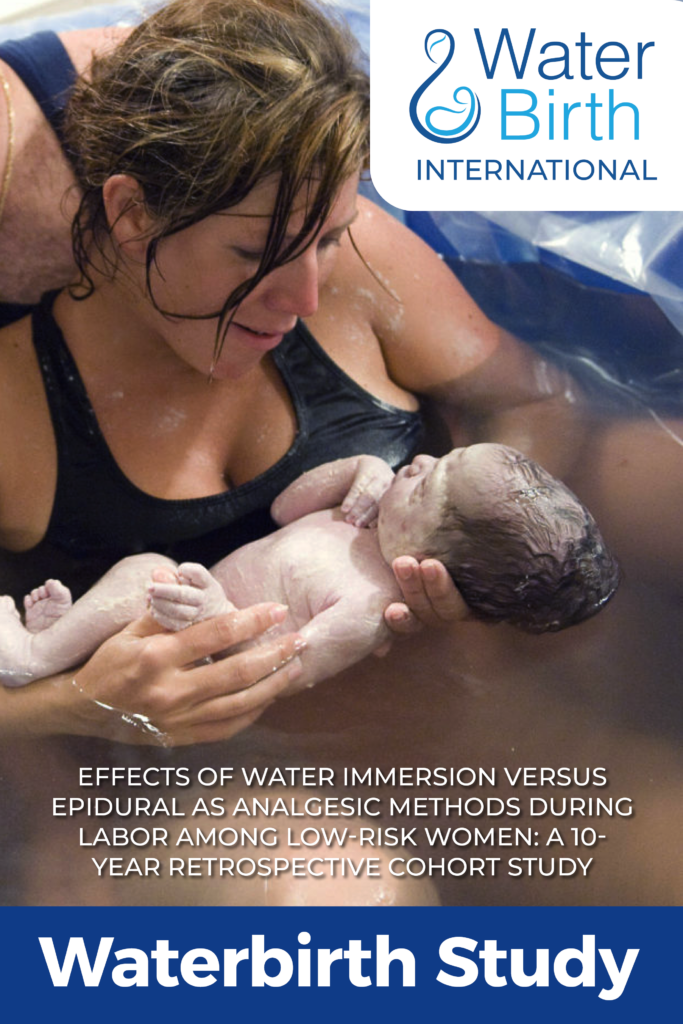
2025 Malloy Study – Effects of Water Immersion vs Epidural as Analgesic Methods
First U.S. Randomized Controlled Trial of Hospital Waterbirth
A 2025 study published in AJOG Global Reports reports findings from the first randomized controlled trial of hospital waterbirth conducted in the United States. The study compared pain medication use, maternal and neonatal outcomes, and birth satisfaction among low-risk pregnant participants assigned to either a waterbirth group or a land birth group. 2025-Malloy-Study-US-Hospital-W…
Researchers enrolled 186 participants, with 106 remaining eligible for the final analysis: 74 in the waterbirth group and 32 in the land birth group. Participants assigned to the waterbirth group were 64% less likely to use IV narcotic pain medication and 62% less likely to use epidural analgesia. 2025-Malloy-Study-US-Hospital-W…
The researchers found no statistically significant differences in the composite maternal or neonatal outcomes between the two groups. There were also no significant differences in NICU admissions or low 5-minute Apgar scores. One umbilical cord avulsion occurred during a waterbirth and was immediately identified, with no adverse consequences reported for the newborn. 2025-Malloy-Study-US-Hospital-W… 2025-Malloy-Study-US-Hospital-W…
Participants in the waterbirth group also reported significantly higher overall birth satisfaction and less stress during labor than those in the land birth group. 2025-Malloy-Study-US-Hospital-W…
The authors concluded that the findings add to the growing evidence that waterbirth can reduce the use of IV analgesia and epidural anesthesia and increase birth satisfaction among appropriately selected, low-risk patients. They noted that the study was relatively small and was not designed to detect rare neonatal complications, so continued research and outcome monitoring are important. 2025-Malloy-Study-US-Hospital-W… 2025-Malloy-Study-US-Hospital-W…
Study: Malloy E, Kram JJF, Adefisoye JO, et al. Hospital waterbirth for low-risk birthing people: findings of a randomized controlled trial. AJOG Global Reports. 2025.